 Advantages of MRI Parallel Imaging MRI parallel imaging
 technology uses complex software algorithms to reconstruct the signals from multiple channels in a way that can reduce imaging times or increase image resolution, without the corresponding increase in imaging times associated with standard MRI scanner imaging. Although parallel imaging techniques have only recently been introduced into
MRI scanners in hospitals and clinics, they have already achieved wide clinical acceptance in many imaging applications. Their considerable advantages in terms of better spatial and temporal resolution and enhanced image quality, have updated the position of MRI in a wide range of abnormality and disease imaging.
Multi-channel technology and
parallel imaging allows for significant improvements in most clinical MRI scanner examinations. There is no significant degradation in performance, compared to non-parallel imaging. Faster scanning could increase the patient throughout, as well as dramatically improve patient comfort during scans.
This technology could potentially contribute to the use of MRI scanning as an alternative to CT scanning and play a significant role in radiation protection strategies, particularly in young patients.
MRI scanning offers superb soft tissue contrast. However, high- resolution scans are often excluded, due to long scan times.
Parallel imaging offers much shorter acquisition times, while retaining the high resolution necessary for early lesion and/or tumor detection
Phased Array Coil SystemMRI parallel imaging takes advantage of the numerous elements of phased array coil system. Each element of the coil system is associated with a dedicated radio frequency channel (a special single-channel radio receiver) whose output is processed and combined with the outputs of the other channels (signals acquired by the other coil elements). This technology improves the signal–to-noise ratio (the signal quality) as compared to a standard MRI scanner coil system; while covering the same explored body volume.
Multi-Channel Radio Frequency and Parallel ImagingMulti-channel radio frequency and parallel imaging technologies are hardware and software implementations, respectively aimed at improving the coverage signal resolution and speed of MRI scanner examinations. With multi-channel technology, the MRI scanner signal used to form an image is collected by a collection of separate coil elements. Each element relays signal information along a separate channel to an image reconstruction computer. Such arrays of coil elements can improve imaging coverage and the ratio of signal-to-noise in the image. The number of elements in the array of detectors is an important factor in characterizing a
parallel imaging system.
Multi-channel coil and receiving systems and
parallel imaging technologies were first implemented in brain examinations. Recent developments in both hardware and software have allowed for broader clinical applications of these technologies, such as in cardiac, lung, abdomen, and limb studies. For example, parallel imaging, in partnership with multi-channel radiofrequency systems allows for better visualization of small lesions and blood vessels that may allow for an earlier diagnosis of cancer and cardiovascular disease. Greater imaging coverage is possible with multi-channel radiofrequency system technology facilitating oncology screening and peripheral angiography. Finally, scan times are considerably reduced using parallel imaging, allowing for tolerable breath holds when scanning patients. The most current MRI scanners at 1.5T and 3T all feature multi-channel radiofrequency system technology and parallel imaging.
Locating Parallel Imaging Upgrades on MedWOWMedWOW, the global medical equipment marketplace, is a good place to look when you are ready to upgrade your imaging department by adding multi-channel technology and
parallel imaging to your MRI system.
MedWOW features imaging inventories from dealers all over the world, so locating the specific
MRI parts you need from a variety of makes, models and manufacturers in a safe and protected environment, is easy and secure. MedWOW is the leading medical equipment portal for all types of medical equipment trade, and with over 12,000 users visiting the site daily; locating your particular MRI parallel imaging upgrade is a relaxed experience.

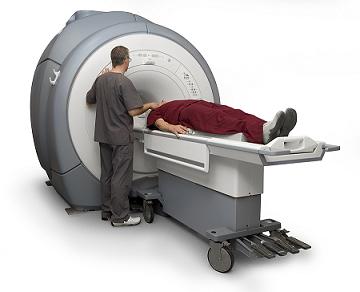 Summarizing the complicated and varied technology in the field of MRI in a brief description represents a challenge. However, it is helpful to know the basic types MR techniques and terminology as the technology has become ubiquitous in patient care. The following is by no means a complete description of MR technology but can help to orient someone new to the field.
