MedWOW is THE multilingual online marketplace for trading medical equipment and connecting buyers and sellers globally.
Hundreds of thousands of complete systems, parts, accessories, and medical supplies are posted for sale and auction!
The user-friendly, international website connects buyers, sellers and service providers of medical equipment from all over the world by offering: comprehensive professional services, unprecedented reliability, multilingual customer support and top value.
Summarizing the complicated and varied technology in the field of MRI in a brief description represents a challenge. However, it is helpful to know the basic types MR techniques and terminology as the technology has become ubiquitous in patient care. The following is by no means a complete description of MR technology but can help to orient someone new to the field. Magnetic Resonance Imaging is based on localizing hydrogen atoms in tissue using radiofrequency wave pulses in an applied magnetic field. As the patient lies in the scanner, a magnetic field is applied, which causes the hydrogen proton in the body to “spin” in the direction of the magnetic field. There are two major types of magnets used: permanent magnets and superconducting magnets. Permanent magnets can be thought of a two bar magnets made of metallic alloys that produce a inform magnetic field between them. Another type of magnet is a superconducting magnet, which is encased in liquid helium to prevent energy loss.
The MRI lets medical professionals see an image of internal structures. Before 1977, when the first human MRI was performed, surgery was the only way to visualize internal body structures. The first MRI back then took 5 hours to produce just one very unclear picture. Since that time, vast improvements in technology have resulted in MRI scans that take 60 to 90 minutes and result in very high-quality images.
Though very safe, MRI’s are not totally safe for all individuals. The “magnetic” part of the name is what allows the representation to be created. The MRI magnet relies on a strong magnetic field to produce the image. This magnetic field is also the source of the danger. Any metal that contains iron can be attracted to the MRI magnet. Therefore, items that can be problematic or dangerous include: jewelry, pacemakers, dental implants, paperclips, pens, keys, or other small objects. These objects can be forcibly pulled out of pockets and travel at high rates of speed into the MRI magnet core of the MRI unit. This poses a great risk for the patient being scanned. Due to this, the MRI technicians are very meticulous about determining if a patient has any metal in or on their bodies. Some people with any sort of internal metal implant may be denied an MRI, due to a possible threat from the high magnetic field.
The magnetic field used in an MRI is expressed in two comparative values: Tesla and gauss. One Tesla is equivalent to 20,000 gauss. The magnetic field produced by the earth is 0.5 gauss. The most common MRI magnets used today are 0.5 Tesla to 2.0 Tesla (magnets greater than 2 Tesla have not been approved for human use, but are used in research). This means that the magnetic field used by a typical MRI is approximately 40,000 times stronger than the gravitational field of the earth.
This large and powerful magnetic field is why MRI technicians carefully control who and what enter the MRI scanner suite.
The most common MRI magnets used in contemporary scanners are called superconducting magnets. This is a typical resistive MRI magnet, composed of coils or windings of wire, through which a current of electricity is passed. The MRI magnet has a significant distinctiveness: the coiled wire is bathed in a solution of liquid helium. Helium becomes a liquid at 452.4° below zero. This extremely low temperature lowers the electrical resistance of the wire to near zero, allowing relatively small amounts of power to create the large magnetic field.
In general, two types of MRI magnets make up the scanner. The superconducting magnet produces a very large magnetic field of uniform strength and stability. Smaller gradient MRI magnets are used to create small variations in the magnetic field. It is the interaction of these two magnetic fields that allows an image to be produced. A complex and powerful computer system interprets the interaction of these magnetic fields, to produce the viewable image that is the inside of your body.
MRI magnets of all kinds can be found in the MedWOW marketplace, as well as all types of imaging equipment systems and parts. MedWOW is committed to providing medical professionals around the world with secure alternatives to finding replacement parts that match their systems and at competitive prices.
Some of the MRI magnets and MRI magnet replacement parts that can be found on MedWOW include: GE Healthcare Signa Horizon 1.0T Magnet Enclosure #450009, Siemens Mobile MAGNETOM Impact SYPHON MAGNET END #1644728, GE Healthcare Signa Horizon LX 1.5T Magnet Encloser Power Supply and many more examples.
For an MRI system to work perfectly there must be synergy between the various MRI parts. Very frequently, MRI parts need to be exchanged, and certainly much before the entire system needs replacing. Keeping your imaging department in safe, patient-oriented and nowadays, even competitive shape is not an easy task, but it's important if you hope to offer the kind of services your patients need and expect. You're very much aware of how expensive used MRI parts can be. Yes, even seemingly simple MRI parts can run into thousands of dollars for good quality replacements.
The main functioning MRI parts of an MRI system include: one external magnet, RF (radio frequency) equipment, gradient coils and a computer. Other MRI part mechanisms include: an RF shield, a power supply, NMR probe, display unit, and a refrigeration unit. All of these MRI parts will need upgrading or replacing during the lifetime of the the MRI system, so it is important to do some basic research and know how to go about replacing these MRI parts on short notice, so you don’t cause any down time which can harm the function of your department, at the very least.
Many times, MRI parts of all kinds can be serviced and repaired, but when that isn’t possible, finding a trustworthy source is imperative. Since MRI systems are relatively complex, and quite unlike other imaging systems, it is important to find an imaging equipment expert who can guide you through the process.
A site that features MRI parts specialists from all over the world is MedWOW, which is a global platform for buying and selling medical equipment. In order to meet their goal of providing comprehensive medical equipment services, with a strong emphasis on used imaging parts, MedWOW developed three methods for locating and purchasing good-quality and guaranteed used MRI parts, all of which are available in a multilingual format which translates communications between buyer and seller, so it is possible to get competitive prices on MRI parts and related imaging equipment and services, even if it is on the other side of the world.
MedWOW’s unique Part Finder Service was created in order to best serve its global user base of medical equipment professionals. MedWOW partnered with dozens of the major used imaging parts suppliers in the world. In this way, they are able to supply healthcare professionals with any available used MRI part from any manufacturer, makes and model from anywhere in the world. This means that if you are searching for a specific used MRI part and you can’t find it anywhere, the MedWOW Parts Finder team will take over your search, and probably find it for you. This imaging parts finder service is completely free, so just fill in your request in as much detail as you can, and then you can sit back and relax and wait for quotes for your used imaging part.
Your second option in used MRI parts finders, is to use MedWOW’s all-inclusive search engine, which is built using copious filtering options, so you can search for just about any used imaging part and find it, even if it has changed names or manufacturers over the years.
Finally, the third ingenious choice is to post an MRI part buying request, by filling out a form and giving as much information as possible about the used imaging part that you seek. The portal attracts sellers from all over the world (10,500 visitors a day) so you will likely be sent a few competitive quotes for your selected MRI part to choose from.

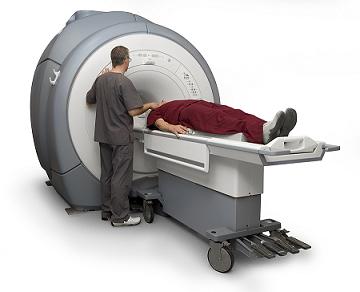 Summarizing the complicated and varied technology in the field of MRI in a brief description represents a challenge. However, it is helpful to know the basic types MR techniques and terminology as the technology has become ubiquitous in patient care. The following is by no means a complete description of MR technology but can help to orient someone new to the field.
